Raila Odinga Dies at 80: Kenya Mourns the Passing of a Political Icon
Former Kenyan Prime Minister Raila Odinga has died at the age of 80. Odinga passed away on Wednesday while receiving medical treatment at a hospital in India. According to Indian police reports shared with AFP, Odinga was walking with family members and his personal doctor “when he suddenly collapsed.” He was rushed to a nearby […]

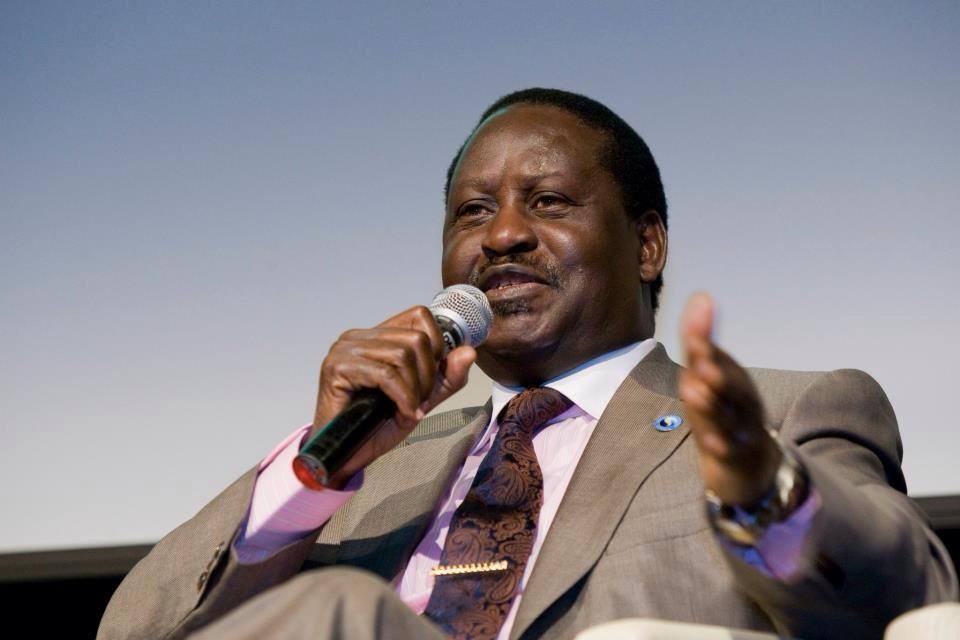
Former Kenyan Prime Minister Raila Odinga has died at the age of 80. Odinga passed away on Wednesday while receiving medical treatment at a hospital in India.
According to Indian police reports shared with AFP, Odinga was walking with family members and his personal doctor “when he suddenly collapsed.” He was rushed to a nearby hospital, where he was declared dead.
Speculation about his health had intensified in recent weeks, although family members and political allies dismissed reports suggesting he was critically ill. Following the news of his death, messages of condolence poured in from across the region, including from Ethiopian Prime Minister Abiy Ahmed.
A towering figure in Kenyan politics and a master mobiliser, Odinga ran unsuccessfully for the presidency five times, each time insisting that victory had been unjustly taken from him.

His stance was validated in 2017 when Kenya’s Supreme Court annulled President Uhuru Kenyatta’s victory, ordering a fresh election. Odinga, however, boycotted the rerun, demanding comprehensive electoral reforms.
His political journey was marked by defining moments, none more consequential than the disputed 2007 election against then-President Mwai Kibaki, which triggered Kenya’s worst political crisis. The post-election violence left more than 1,200 people dead and displaced about 600,000 others.
To end the turmoil, former UN Secretary-General Kofi Annan, resulting in the creation of a coalition government where Odinga served as prime minister, brokered a power-sharing deal.

Throughout his career, Odinga demonstrated a unique ability to reconcile with his rivals after contentious polls. Following his 2022 election defeat, he later joined President William Ruto in what was termed a “broad-based government,” which saw several of his allies take up key positions. He defended the move as necessary for national unity, coming in the aftermath of nationwide protests that culminated in the storming of Parliament and left dozens dead.
Earlier this year, the Ruto administration supported Odinga’s bid to become chairperson of the African Union Commission. Despite strong backing from across the region, he lost to Djibouti’s Mahmoud Ali Youssouf.
Throughout his decades-long career, Odinga inspired passionate loyalty, particularly in western Kenya, his home region. Admirers fondly called him “Baba” (Father), “Agwambo” (Act of God), and “Tinga” (Tractor)—the latter drawn from his party’s symbol in the 1997 elections.

He was widely regarded as a champion of democracy and human rights, and his life bore testimony to endurance in the face of adversity. A former political prisoner, Odinga holds the record as Kenya’s longest-serving detainee, having been imprisoned twice—first from 1982 to 1988 and again from 1989 to 1991—under President Daniel arap Moi’s regime.
His first imprisonment stemmed from allegations of involvement in the 1982 coup attempt against Moi, an event that propelled him into the national spotlight.
Raila Odinga will be remembered as a tireless fighter for justice, democracy, and unity—a man whose influence shaped Kenya’s political landscape for more than four decades
Reporter
0 Comments
Leave a Comment